

Freight rates have moved fast this year, and reversed just as fast. In the six weeks after the Strait of Hormuz closed, air rates from Europe to Dubai went from index 100 to 220; then Europe–Mumbai spiked 70% and leveled back half of this within two months (chart 1).
Every open quote you already sent can land back on the desk to be priced again. That is the worst case for sales and procurement teams: the hours go on work you had already finished. A Valencia-inbound 20DV quoted in June was nearly 60% deviated within a month (chart 2). The margin you expected goes with it, and you price the business a second time under pressure.
.png)
.png)
Keep every quote in one place
Start with where the quote lives. On most desks a sent quote is a dead document: a PDF in an email thread, cut off from the rates and surcharges behind it, so reworking it means going back out to the carrier portals for every number by hand. When quotes are part of one system, as with cargo.one, every line is still linked to the carrier it came from. You reopen the live quote and rework it in place, and that link is what makes the live data, the refresh on demand, and everything after it possible. The shipper who needs an LCL shipment this week may also need to consider air freight, and both quotes run on the same connections in the same system.
Connect to live data
We directly connect forwarders with more than 75 airlines, dozens of general sales agents (GSAs), and the top ocean carriers globally. The rates those connections carry keep moving, as carriers on both modes now price against live demand. On an index set to 100 a year ago, Shanghai to Valencia ran up to 207 and is back down to 190, while Nhava Sheva to Valencia has climbed past 300 and is still rising. Same forwarder, both into Valencia, opposite directions (chart 2).
A quote in ocean freight carries every local charge and surcharge, spread across hundreds of line items in as many formats. The failure I see most often is a quote built up charge by charge with one missing: sometimes it costs a few dollars, sometimes one to two thousand, and it erases the whole profit on the shipment. Holding those connections is the hard part: carrier APIs are uneven, some carriers still send an Excel file, and every one is a different integration. Keeping that current is something we manage at cargo.one so you never see it.
Refresh on demand
So a rate moves overnight. For many, re-quoting even a lane they know well means re-checking each carrier's current number and updating the quote by hand. On cargo.one you do not: you open the stored quote, the system re-checks the market against live rates, and it reprices in minutes. A moved rate is not a broken promise, but information you can act on before the customer calls. And that number holds up: when it comes from a direct connection, you can commit to it with the customer instead of calling around to confirm.
Be proactive: call the customer before they ask
That was defense. The offense, on the other hand, is the morning after a swing: refresh your open quotes against live rates and call the customer with a fresh number before they call you. First to send the quote usually wins the deal.
But being first only wins if the number and the service are also the best, and the best require a broader view of the market than most have. Most teams I talk to quote from the two or three carriers they know well, because checking a fourth means another tab, another portal, another login, and nobody spends that time with a customer waiting. For example, a forwarder in Spain told me how they watched a competitor take a shipment on exactly that margin. Both quoted well, but the competitor had one more carrier on the screen at a lower price and better service, and that one extra carrier came in €250 per TEU cheaper, the whole difference on the deal. And where the cheapest lane changes week to week, that is not one lost shipment but a run of business the others never knew was in play.
Automate it with AI
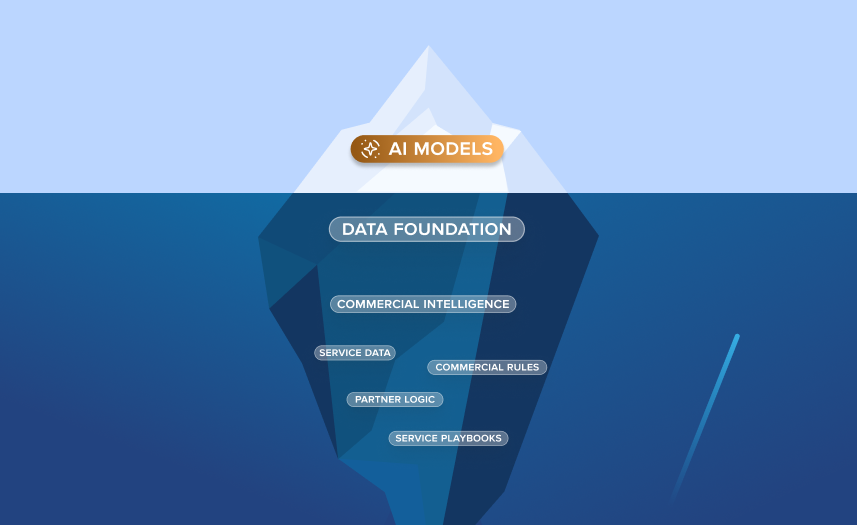
Refreshing a quote against live rates is how you stop losing margin to volatility today, but it still runs on a person assembling the quote. But when AI takes that on, the swing turns into competitive advantage: a request arrives by email, AI reads the shipper and the shipment detail, calls the carriers, assembles the surcharges, flags what is missing, and hands back a quote to review in minutes. The person supervises; the work runs underneath.
The day after the next disruption, your desk opens twenty stored quotes, refreshes them against live rates from every connected carrier, and has them back with customers before lunch, surcharges intact and nothing missing. That frees the team for the two shipments that need a decision, and for the customer whose container is somewhere it should not be. Something goes wrong on a shipment most days, and what a shipper remembers is how you solved it.
If you'd like to talk through what this looks like on your own lanes, get in touch.


.jpg)